a.
Easier posture
Standing tall stops feeling like a project. Sitting at a desk costs less.
Structural Integration® and Rolf® movement education with Feryl Hunter Webster, Certified Rolfer® since 2000. Eighty-minute sessions that help bodies — desk-tied, mountain-tired, recovering, or just curious — find a more comfortable shape.
A systematic approach to bodily rehabilitation, pain relief, and improved movement — through soft tissue manipulation and movement re-education.
Rolfing® Structural Integration is the work of Dr. Ida P. Rolf, who spent fifty years developing a method for organizing the human body in the field of gravity. The work centers on fascia — the connective tissue web that runs continuously from head to toe, shaping every muscle, every joint, every organ.
When fascia becomes restricted — by injury, repetitive strain, prolonged sitting, emotional holding — the whole structure compensates. A tight calf pulls on the low back. A rounded shoulder shortens the breath. Rolfers® work to restore length, glide, and adaptability to those tissues, then teach the body to use that new freedom.
The result is not relaxation in the spa sense. It is a sense of being assembled — taller, lighter, more at home in your own bones.
The work addresses connective tissue — the body's continuous fabric — rather than isolated muscles.
A well-organized body lets gravity support it. A disorganized one fights gravity all day.
Local complaints are addressed by reorganizing the structure that produces them.
Sessions include guidance for how to sit, stand, walk, and breathe with the new structure.
Both feel like hands-on bodywork. The intention behind them — and what they're trying to change — is different.
Modern Rolfing® is far gentler than its early-1970s reputation. Pressure is calibrated continuously to what your nervous system can welcome — the goal is change, not endurance. Some moments feel like a warm, releasing stretch. Others feel like productive discomfort. None of it requires you to grit your teeth. Feryl checks in throughout, and you set the pace.
Results vary. The most commonly reported changes after a series of sessions:
Standing tall stops feeling like a project. Sitting at a desk costs less.
Range of motion expands; joints feel oiled. Old movement habits soften.
Chronic aches — neck, low back, hips — often quiet down as the structure reorganizes.
You start noticing — and adjusting — patterns of holding before they become pain.
Less effort to stay upright leaves more in the tank for everything else.
Clients often describe feeling more themselves — less braced against the world.
Rolfing® is for bodies, not body-types. Grand Junction's mix shows up across the table:
Climbers, cyclists, trail runners, skiers. Recover faster, move more efficiently, train injury-free.
Forward-head, rounded-shoulder, hip-flexor-tight patterns get unwound and re-taught.
Post-surgery, post-collision, lingering sprain. Address compensations that outlast the original injury.
Persistent low-back, neck, or hip pain that hasn't responded to other approaches.
Scoliosis support, asthma, growing pains. Sessions are gentle and adapted to the child.
People who want to feel more at home in their body — no specific problem required.
Eighty to ninety minutes. No surprises. Here's how a visit unfolds.
Brief conversation about how your body is feeling, what brought you in, what we worked on last time.
Feryl observes you standing and walking — which is why attire matters. Men wear boxers or briefs; women a sports bra and full-coverage underwear. You are draped and warm throughout.
The bulk of the session, on a heated table — sometimes seated or standing. Sensations range from a warm release to focused, productive discomfort. You are in charge of pressure.
Standing, walking, and simple movements to integrate the changes — so your nervous system learns the new structure.
One or two things to notice between sessions. No exercises to grind through. The work keeps integrating for several days after each appointment.
Feryl's priority is whether your body can accept and integrate each change — not pushing through a protocol. The work follows you.
Traditional Rolfing® is delivered as a ten-session series — each session building on the last. Feryl follows that arc, with flexibility for what your body needs.
The series moves in arcs: opening sessions create space and breath; middle sessions reach the core; final sessions integrate the whole.
Sleeve sessions (1–3) open the surface — breath, sides, lower body. Core sessions (4–7) reach the deep midline — pelvic floor, spine, neck. Integration (8–10) weaves the whole structure into a unified, gravity-friendly system.
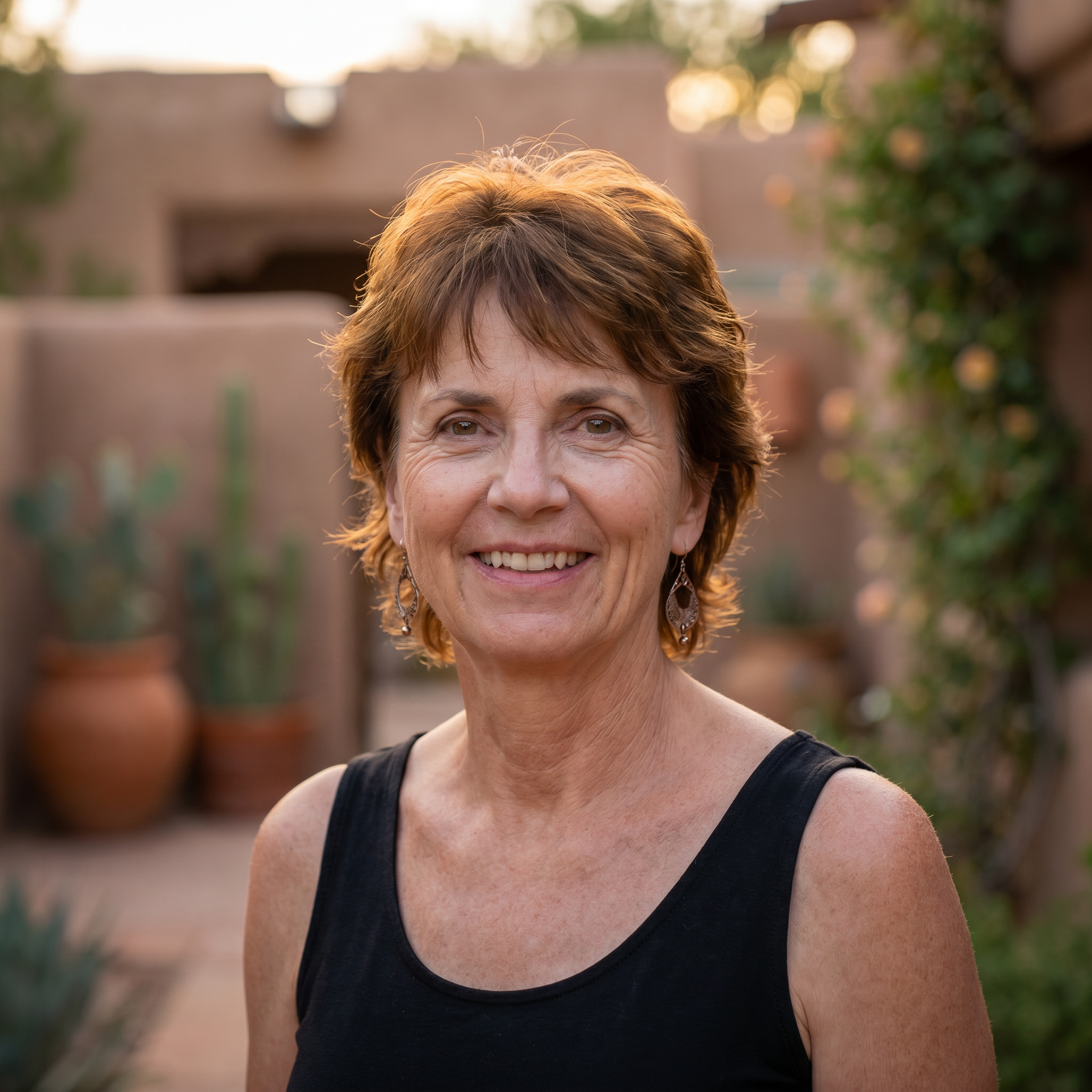
Feryl came to Rolfing® the way many clients do — through pain she couldn't resolve any other way. A horseback riding accident at thirteen left her with constant neck and shoulder pain and migraine headaches that followed her for years. At twenty-seven, five months pregnant with her second child, she encountered a Rolfer® for the first time. She had been unable to sleep flat because of pain in her back and legs. One session provided enough relief to change the direction of her life. She went on to certify nineteen years after that first appointment.
Rolfing® has also been her own rehabilitation — after an auto accident, and after bilateral calcaneal fractures (both heels). She has lived inside chronic pain, knows how fully it can limit a life, and brings that understanding into the room with every client.
Certified Rolfer® since 2000, trained at the Rolf Institute of Structural Integration in Boulder, Colorado — now the Dr. Ida Rolf Institute. Twenty-five years of continuous practice, with ongoing study in visceral manipulation, Rolf® Movement, and ergonomic evaluation. She spent more than two decades working with clients in Colorado Springs before relocating the practice to Grand Junction.
Her approach is patient and conversational. She considers carefully how and whether an individual can accept and incorporate changes into their body — she meets a body where it is, not where a protocol says it should be. The work suits skeptics, athletes, kids with scoliosis, and people who can't quite explain why something hurts.
If yours isn't here, call (719) 310-3688 or send a note via the form below.
All appointments are booked by phone. The form below is for general inquiries — not for sharing health information.
Phone booking only. Leave a message if Feryl is in session — she returns calls within the day.